Brakes tend to tell you they need attention before they fail, and the language they use is sound. The trick is knowing which noise means "schedule soon" and which means "stop driving and get this looked at now." Here's how to read what your brakes are telling you.
Squealing or squeaking
A high-pitched squeal when you brake is often by design: many brake pads have a small metal wear indicator that scrapes the rotor when the pads get thin, making noise specifically to warn you. It usually means the pads are near the end of their life and it's time to schedule service — not an emergency, but don't ignore it. (A brief squeal on the first cool, damp morning can just be surface moisture and is normal.)
Grinding — the expensive one
A harsh metal-on-metal grinding usually means the pads are completely worn through and the metal backing is now chewing into the rotor. This one is urgent: every stop is damaging parts and lengthening your stopping distance. Caught at the squeal stage, you might just need pads. Left until grinding, you're often looking at rotors too — a bigger bill that was avoidable.
The difference between a squeal you scheduled and a grind you ignored is often the difference between a pad job and a pad-and-rotor job.
Grumbling, growling, or rhythmic noise
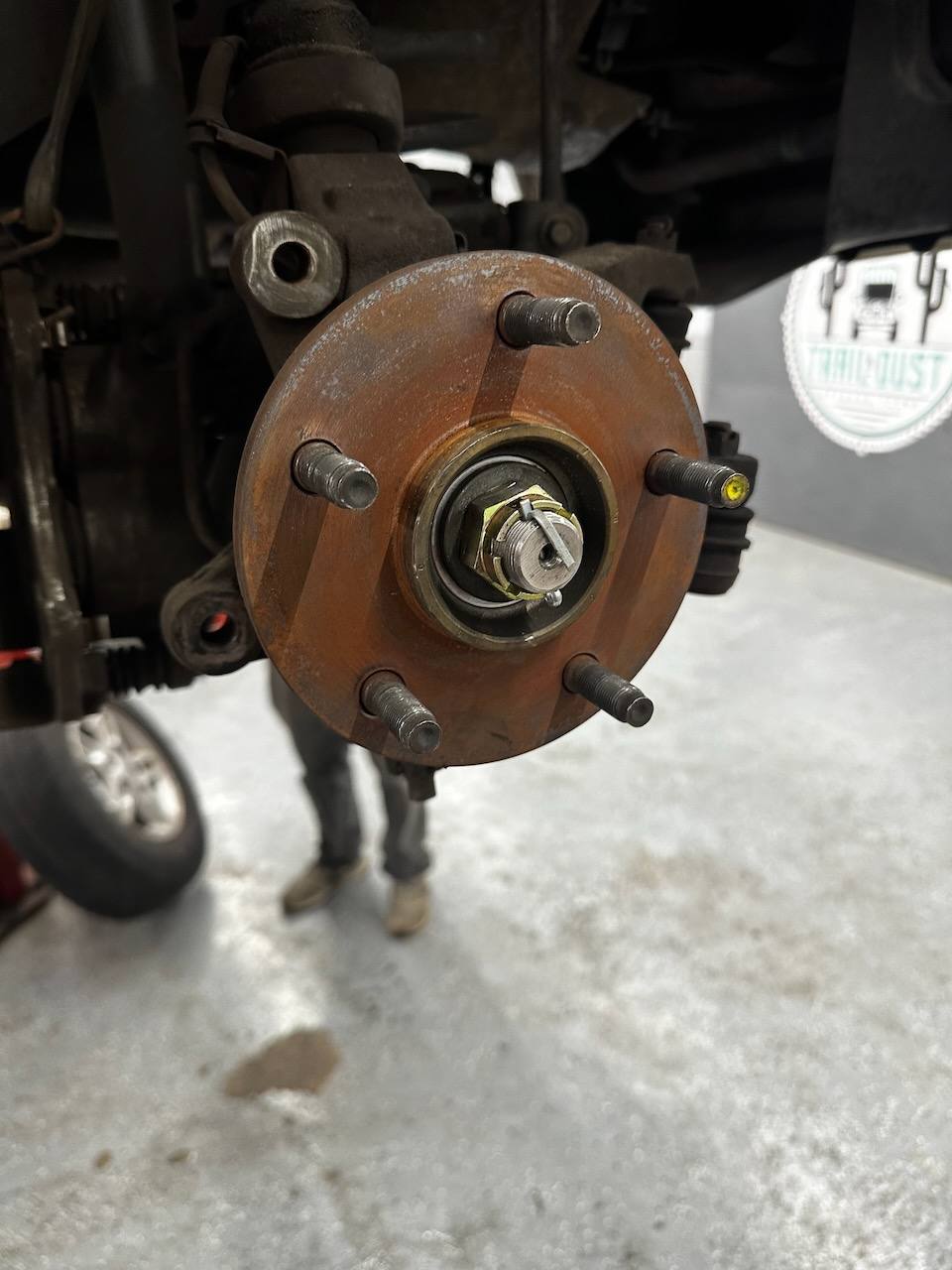
A low grumble or a sound that rises and falls with your speed can point to rotor problems, worn hardware, or sometimes a wheel bearing rather than the pads. Because several things can cause it, this is a "get it inspected" noise so the right part gets addressed.
Clunking or thudding when you brake
A clunk when you hit the pedal can mean loose hardware, a worn caliper component, or a suspension part that shows up under braking load. It's worth checking promptly because brake and suspension safety overlap here.