
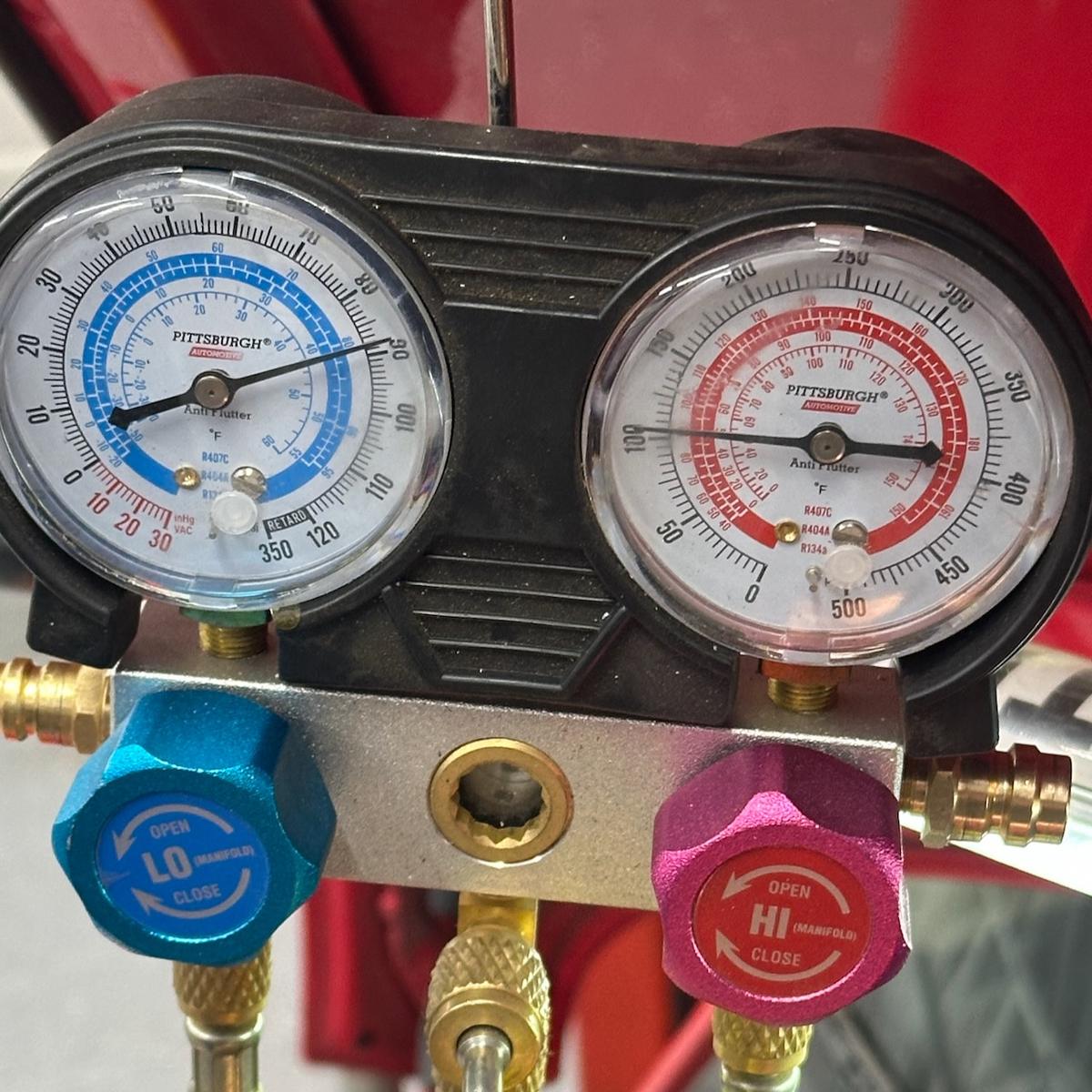
There's a specific kind of dread that comes with reaching for the A/C on a 105-degree Tucson afternoon and feeling warm air pour out of the vents. In our climate, a working air conditioner isn't a luxury — it's a safety system. The good news is that "blowing warm" usually points to a short list of causes, and catching it early is far cheaper than waiting until July when every shop in town is booked solid.
Here's how to think about what's happening, and what's worth checking before it turns into a bigger repair.
Low refrigerant — and why that almost always means a leak
Your A/C cools by compressing and circulating refrigerant. If the charge is low, the system can't pull heat out of the cabin and the air comes out lukewarm. The important part most people miss: a properly sealed A/C system doesn't "use up" refrigerant. If it's low, it leaked out somewhere.
That's why simply topping it off with a can from the parts store is a short-term patch at best. The refrigerant you add will leak out the same way the last charge did, often within weeks. A real fix means finding the leak — a tired O-ring, a corroded line, or a failing component — and sealing it before recharging.
A worn or seized A/C compressor
The compressor is the heart of the system. In Tucson, it works harder and longer than almost anywhere in the country, so wear is common. Signs of a struggling compressor include a loud clicking or grinding when the A/C kicks on, air that's cold at highway speed but warm at a stoplight, or a burning smell. A compressor that has fully seized usually needs replacement, which is why catching the early warning signs matters.
A clogged or heat-baked condenser
The condenser sits at the front of your car and sheds heat from the refrigerant, much like a radiator. Tucson dust, bugs, and road grime pack into its fins, and our heat gives it no margin for error. A blocked condenser can't dump heat, so the air at the vents never gets truly cold. Sometimes a thorough cleaning helps; sometimes a rock or debris has bent the fins or cracked it.
The things that masquerade as an A/C problem
Not every "warm air" complaint is the A/C itself:
- A blend door or actuator stuck on the heat setting will blow warm even with a perfect A/C system.
- A weak cooling fan means the condenser can't shed heat while you're stopped — cold on the move, warm at idle.
- A cabin air filter choked with dust cuts airflow so the air feels weak even when it's cold.
The point of a proper inspection is to tell these apart before parts get replaced. That's the difference between fixing the problem and guessing at it.
What to do in the meantime
Until you can get it looked at, park in the shade when you can, use "fresh air" rather than recirculate for the first minute to push hot cabin air out, and don't keep dumping store-bought refrigerant into a system that's clearly leaking. If the air is warm and you smell something sweet or oily, have it checked sooner rather than later.